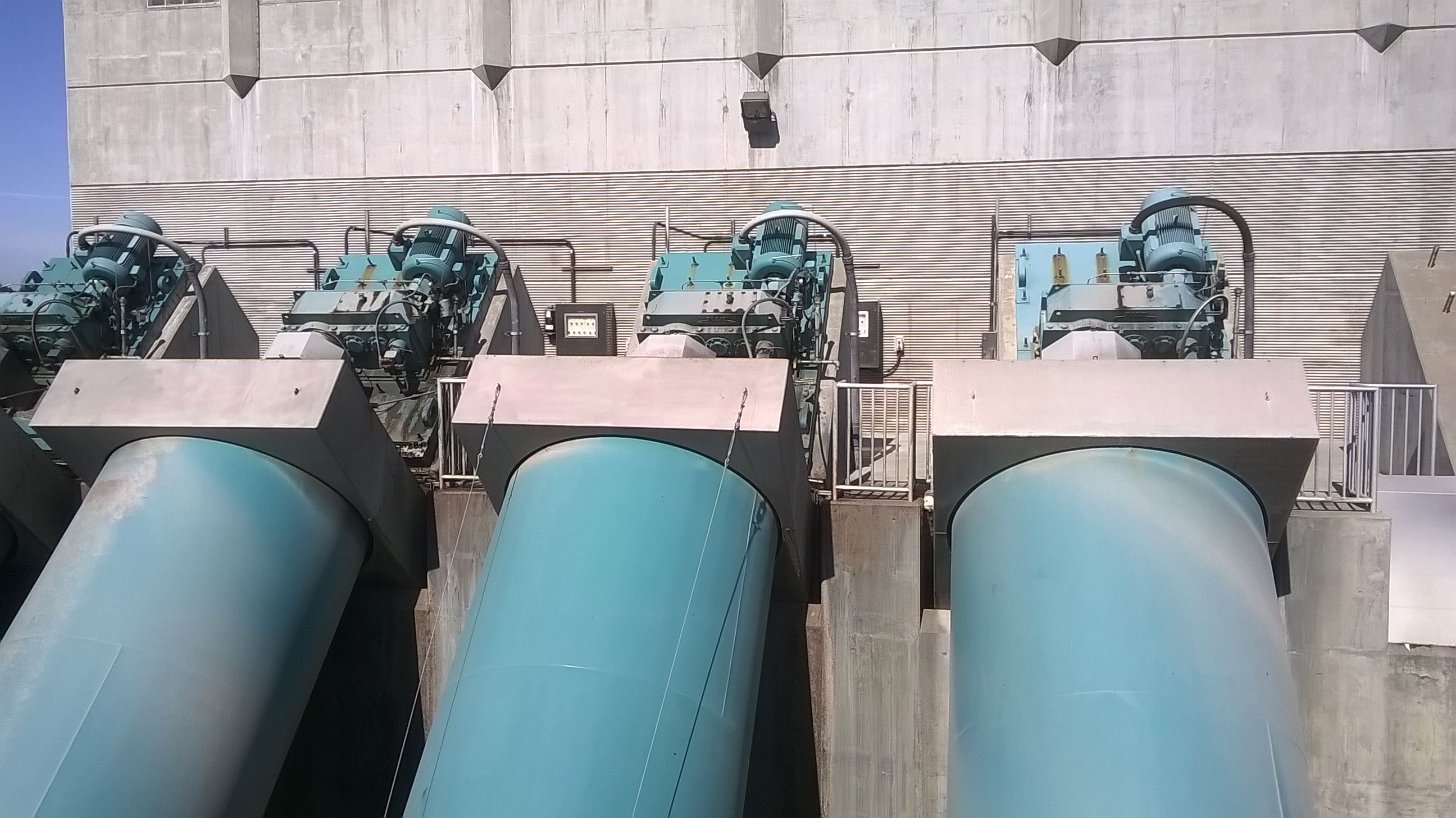
The Sutter Treatment Facility was built in 1919 on 38 acres of land along the Tuolumne River on Sutter Avenue. The facility began treating the City's wastewater in order to safely discharge it back into the river. Now, an average 20 million gallons a day are treated at Sutter.
This plant removes inorganic and settleable organic wastes from wastewater by separating them from the water in a large clarifier. The inorganic solids are removed and sent to the landfill for disposal. The organic solids are broken down and converted into biosolids, where they are dried and then disposed of on the Jennings Ranch.
Advancements over the Years
- Prior to 1910: The City's wastewater was discharged directly into the Tuolumne River.
- 1919: The facility began as a giant septic tank. The tank's overflow was discharged into the Tuolumne River.
- 1928: The City purchased more acres at the facility. Oxidation and percolation beds were constructed.
- 1930: The City replaced the septic tank with a 62-foot clarifier to better separate waste materials in the water.
- 1937-1955: Regulatory agencies became more stringent, so the City made a number of additional improvements including comminutors, digesters and chlorine disinfection.
- 1969: Domestic outfall, Oxidation Ponds and River Discharge Station constructed at the Jennings Campus.
- 1984-1986: Construction of Fixed-Film Reactors, Storage Ponds, and Jennings Ranch to address high strength cannery waste.
- 1998: Completion of the Cannery Segregation system and upgrade to the Sutter headworks
- 2010: Completion of Phase 1A of the tertiary treatment system
- 2016: Completion of Phase 2 of the tertiary treatment system
- 2018: Recycled water delivered to the Delta-Mendota Canal and the inception of the North Valley Regional Recycled Water Program.